Cynophobia therapy for kids
Help your child break free from a fear of dogs.
Expert, gentle help so your child can feel calm, confident and free around dogs — at a pace they choose, with you involved every step.
- Evidence-based therapy
- Fun and age-appropriate
- Your child sets the pace
- Parents involved throughout
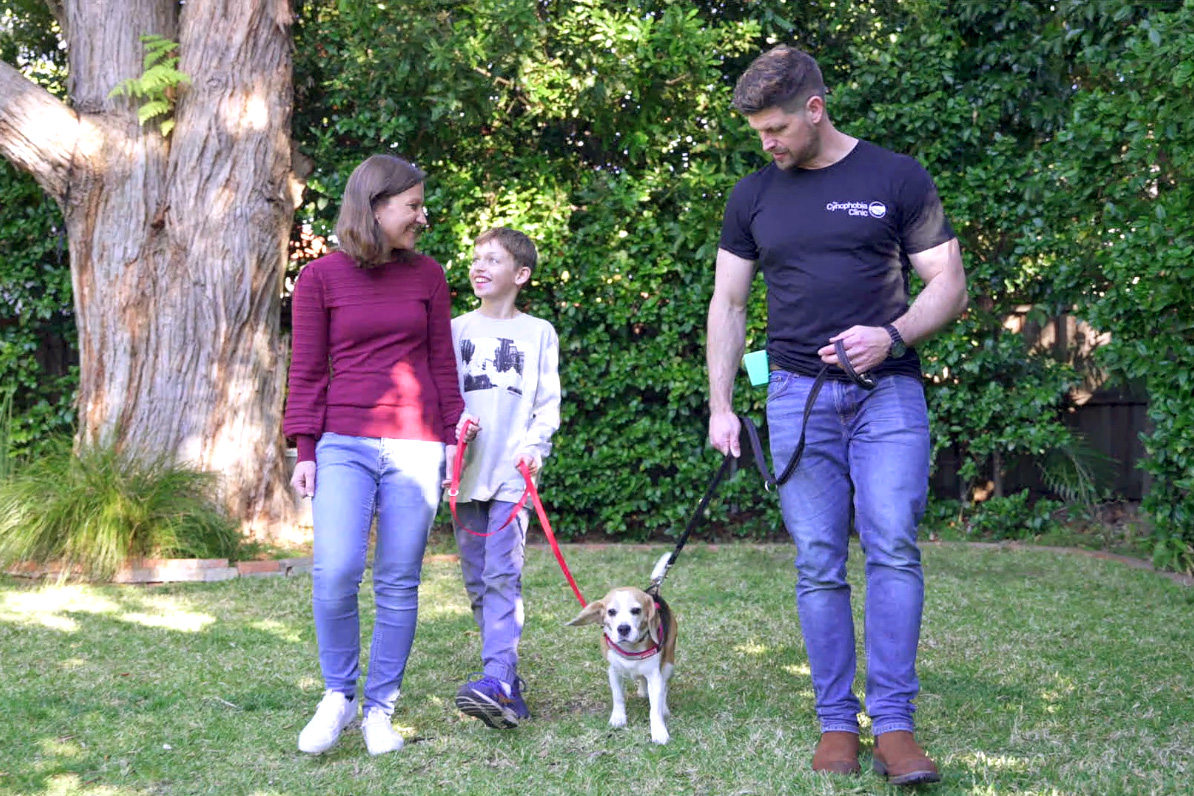
Dogs are everywhere these days, so a fear of dogs can really narrow your child's world — parks, playdates, parties missed. As a parent you don't know whether to push or protect. It doesn't have to be this way forever.
Step 1 — Plot a path to success
The Roadmap session
Every journey starts with a Roadmap session: a comprehensive 90-minute telehealth consultation with Anthony — for you, the parent or carer.
Together we'll build a clear picture of your child's fear, set goals that matter to your family, and map out exactly what's needed to get you all there.
You'll leave the session with greater clarity and understanding — and feel empowered to choose what to do next.
Step 2 — Take back control
Therapy sessions & coaching
After the Roadmap session, help is available in two ways: one-to-one therapy for your child, or coaching for you as their parent — in person in Sydney or by telehealth wherever you live.
We use an evidence-based approach that builds safe, controlled experiences with dogs until those positive experiences outweigh the fear.
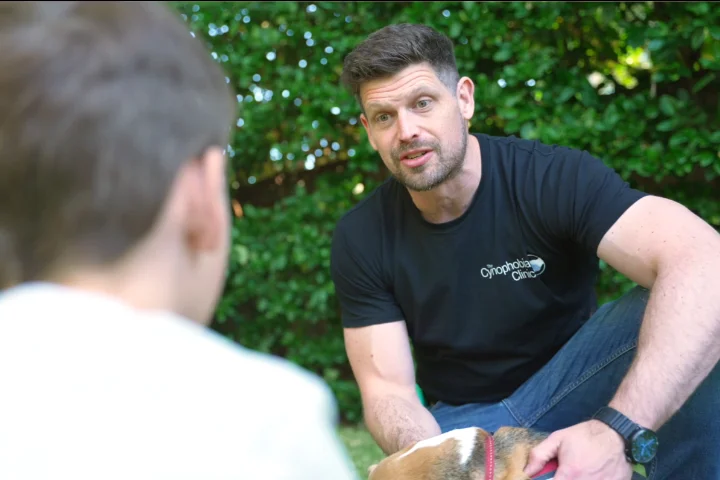
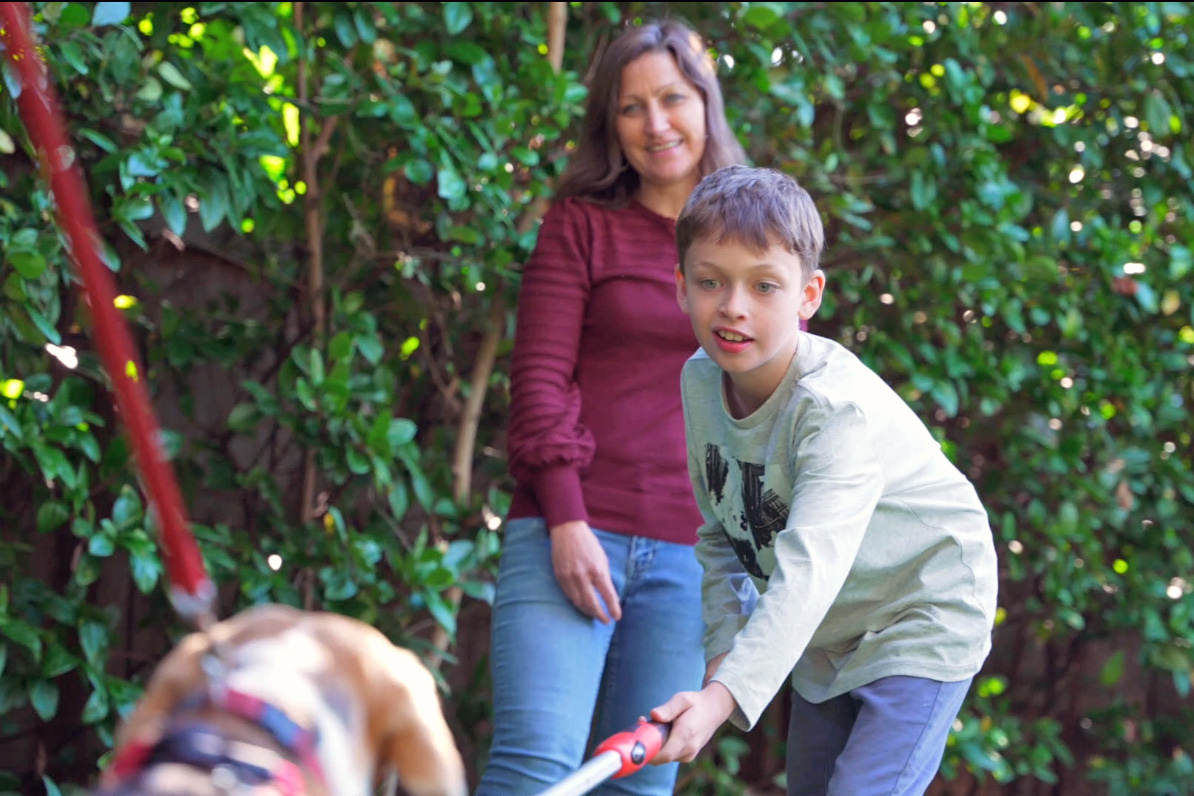
In therapy, sessions are playful and led by your child's comfort, with dogs introduced at a pace they set themselves. In coaching, you'll learn the same evidence-based techniques to guide your child through those experiences yourself, at home and in daily life.
Progress happens at a level your child feels comfortable with, step by step as their confidence grows. No two phobias are quite the same, so this process is completely tailored to your child's needs. You stay involved throughout — your support makes a real difference, especially for younger kids.
Standard therapy program
Our standard program comes in two versions, so the session length suits how your child works best.
The majority of clients achieve their therapy goals in just six to ten sessions, however additional sessions can be arranged if your child needs more time. A parent telehealth consultation is also included as part of the program.
If for any reason you decide not to continue after the first session, we'll refund the remaining sessions in full.
Intensive therapy program
Our intensive therapy program is designed for families visiting Sydney for therapy, and is usually completed over two or three consecutive days.
We understand that coming to Sydney for therapy is a big deal. We'll only recommend the intensive program if we feel confident that it's a good fit for your child.
The sessions are extended so your child has plenty of time to learn skills and build confidence with several different dogs, at whatever pace they're comfortable with.
Of course, we can continue to support you and your child with telehealth sessions when you return home.
Telehealth consultations
If travelling to Sydney isn't an option, we can still support you and your child with therapy or coaching consultations, wherever you live.
We love giving guidance and sharing our knowledge with families across Australia and around the world.
Whether your child's fear is mild or severe, we're here to help make their fear smaller and their life bigger.
Home visits
Bringing home a cute puppy might sound like a great way to help your child feel less afraid of dogs — but it doesn't always go according to plan.
If your child can't relax around the dog, or isn't building confidence through positive interactions, we can help.
We can work with you and your child in your own home to turn a stressful situation into an opportunity for growth.
Medicare rebates, NDIS funding, and private health extras can all reduce how much you pay.
See funding and rebatesBacked by science
Exposure therapy is endorsed as the frontline, evidence-based treatment for specific phobias by the Australian Psychological Society, the American Psychological Association, the American Psychiatric Association, and the UK's National Institute for Health and Care Excellence (NICE).
The idea is simple: by gradually and safely facing the thing you fear, at a pace you're comfortable with, your brain learns that it isn't as dangerous as it feels. Over time, the fear response fades as your confidence grows. Decades of research back this up:
- A meta-analysis of 33 clinical trials found that around 85% of people who received exposure therapy for a specific phobia showed significant, lasting improvement.
- Structured exposure protocols report improvement in 85–90% of people treated for a specific phobia — among the highest response rates for any psychological treatment.
- Improvement tends to hold: in follow-up research, around 95% of people who responded still maintained their gains a year later, with no further therapy in between.
- It can also work quickly. A meta-analysis of 67 clinical trials found both single-session and multi-session exposure therapy to be highly effective, and a randomised trial in children and adolescents found that a single well-designed session can match the results of months of other therapy.
The research is clear: exposure therapy is highly effective, fast-acting and long-lasting. We take pride in offering an individualised approach to exposure therapy that is both informed by research and tailored to your child's unique circumstances.
How we work
-
Collaborative
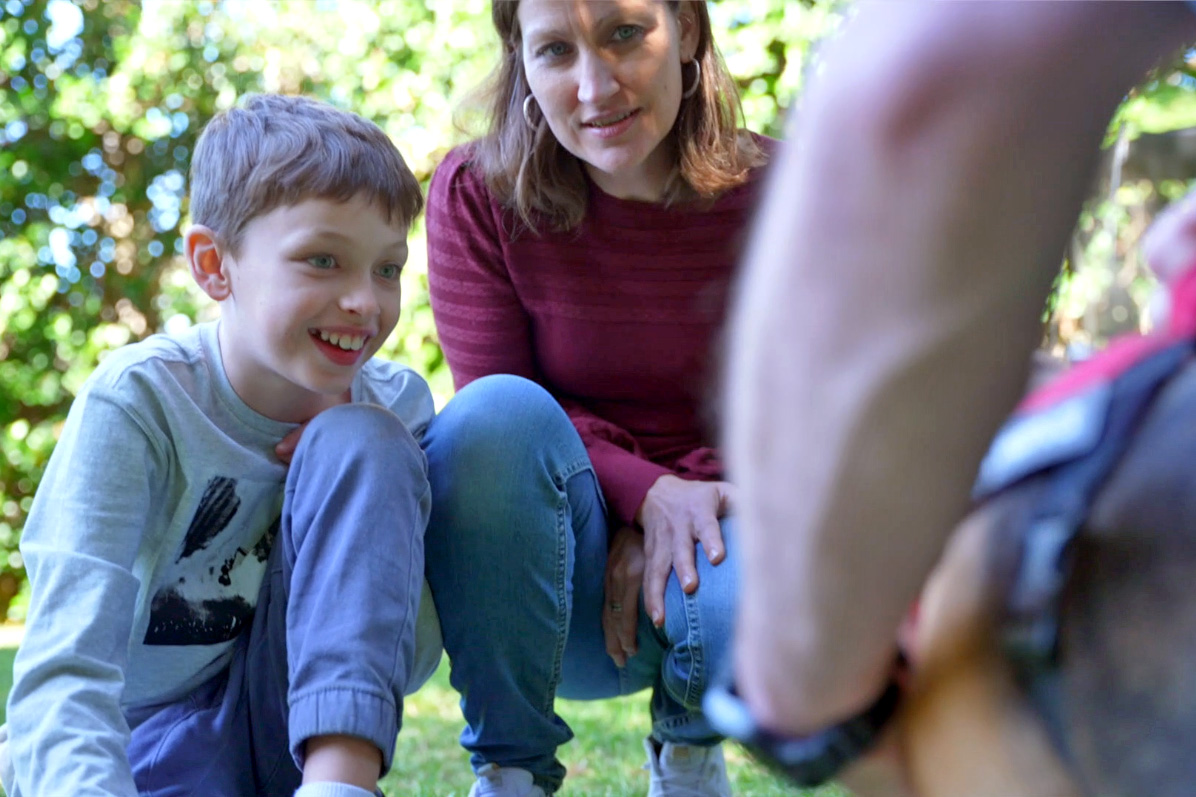
Therapy begins at a level your child is comfortable with and progresses only as their confidence grows. We're here to make them feel safe and supported. We will never push or take away their control.
-
Evidence-based
We don't do woo. Our approach is based on the science of fear and learning. Your child's therapy is led by a clinician who is an expert in both human psychology and dog behaviour.
-
Goal-focused
Whether your child wants the confidence to have a dog of their own or just to enjoy a stress-free walk in the park, we'll help them achieve the goals that are meaningful to your family.
-
Neurodiversity-affirming
We recognise and respect different ways of thinking and experiencing the world, meeting each child with curiosity and care rather than treating differences as deficits to correct.
Ready to get started?
Book a Roadmap sessionCommon questions
-
Exposure therapy is well supported by research as a highly effective approach, but success means something different for everyone. For some parents, going about everyday life without their child panicking at the sight of a distant dog is more than enough; others want to bring a dog into the home. Of course, outcomes can't be guaranteed, but every effort will be made to help your child achieve goals that are meaningful to you both.
-
We typically wouldn't recommend structured exposure therapy sessions for very young children, but age isn't the only deciding factor. Regardless of your child's age, if they're struggling with a significant fear of dogs, and you're feeling lost, the Roadmap session is designed to help you find your way.
-
They won't have to do anything. We never push children to do anything they're not ready to do — that wouldn't just be unethical, it would be counter-productive. That said, the idea that a child can overcome a fear of dogs without ever interacting with them is unrealistic, so we build up to it gradually and safely.
-
We completely understand — the idea of therapy can feel terrifying for a child with a phobia. That fear usually comes from a misunderstanding of what therapy involves. We create a very controlled environment, with no surprises, and we'll never make your child do anything they're not willing to do. It's about building a different experience with dogs — one where they feel safe and in control.
-
For many autistic children, fear of dogs makes complete sense — dogs move unpredictably, make sudden noises, and can make contact without asking. Therapy starts there, not from treating the fear as irrational. We optimise exposure therapy to be more effective and affirming for autistic clients by following the ASCENT model, which emphasises autonomy and accommodating sensory, communication and other differences. In practice that means that nothing happens without warning, information is concrete rather than reassuring, and session length is matched to your child's attention and regulation rather than their age. Communication supports, movement breaks and sensory adjustments are straightforward to build in. Just tell us what your child needs.
-
We aim to be as inclusive as we possibly can. Tell us what your child needs and it will be built into how sessions run — access, communication, a support worker attending, sessions in a different location, anything else.
-
Yes — and that's a strength. Your involvement supports your child's progress, particularly for younger children. Every standard program includes a parent or carer consultation, and we'll give you practical ways to help between sessions.
-
If your child is a Medicare card-holder, make an appointment with your GP and request a 'mental health care plan' to get a psychologist referral for their fear of dogs. See funding and rebates for details.
-
Yes. Both in-person therapy and telehealth consultations are classified by the NDIS as 'therapeutic supports'. See funding and rebates for details.
-
Not every child needs the full number of sessions to overcome their fear. If that's your child, they can use the remaining sessions to deepen their understanding of dog behaviour and build more confidence, or finish therapy early if you prefer.
-
Our programs are based on what works for most clients, but every phobia is different and it's impossible to say exactly how many sessions your child will need. If they haven't quite reached their goals by the end, we can arrange additional sessions as needed — as long as they're keen to keep going, so are we.
-
Yes. Our intensive program is designed for families visiting Sydney for therapy. If you can't come to Sydney, you can work with us remotely via telehealth, or you can access our self-paced online cynophobia program for parents, Pack Leader.
Ready to take the first step?
Are you ready to help your child break free from fear and take back control? Start with a Roadmap session with Anthony — we'll take it from there, at their pace.
Book a Roadmap sessionPack Leader
Looking for a lower-cost, self-paced option?
Pack Leader is an online program, built on the same approach used in the clinic, for parents helping a child through a fear of dogs.
Learn how to guide your child beyond their fear, one manageable step at a time, with Anthony's expert guidance.