Cynophobia therapy for adults
Break free from your fear of dogs.
Expert help to feel calmer around dogs and more confident handling everyday encounters — at a pace you choose, with no surprises.
- Evidence-based therapy
- Individualised
- You set the pace
- Telehealth or in-person
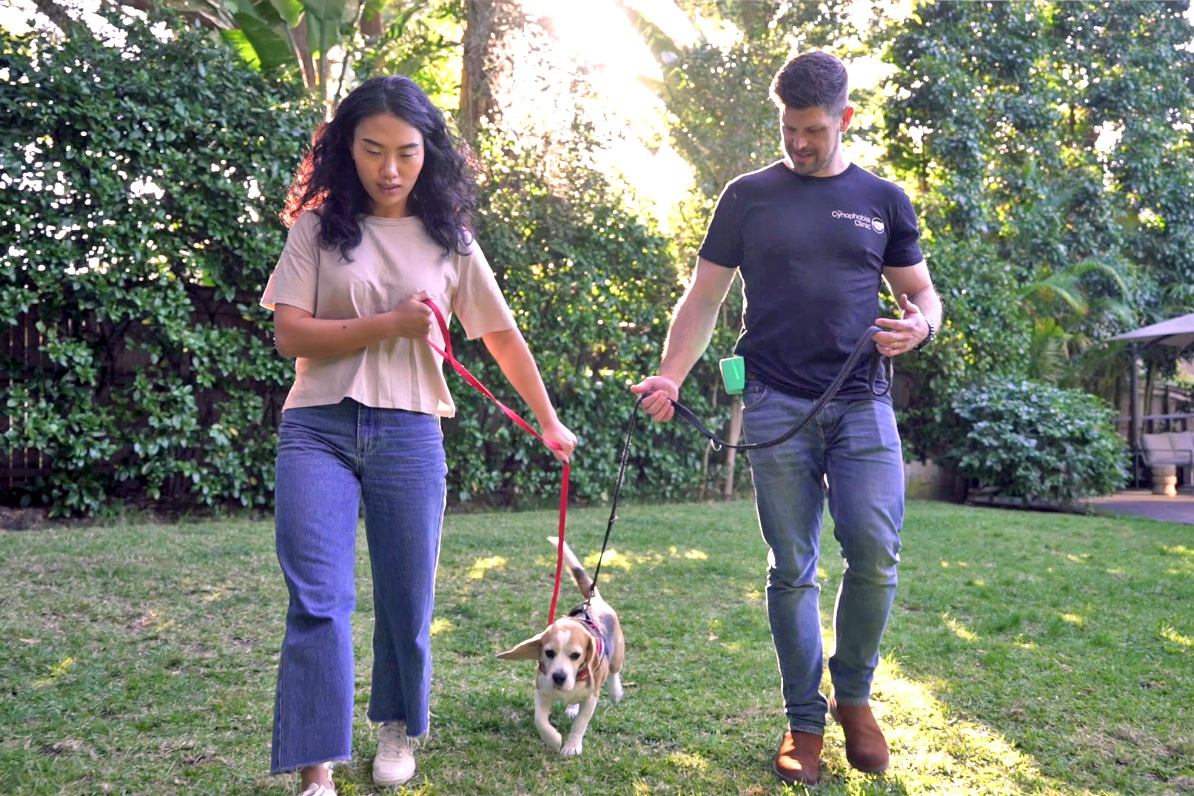
Dogs are everywhere these days, so a fear of dogs can really narrow your world — the parks you avoid, the social events you turn down. It's exhausting but it doesn't have to be like that any longer.
Step 1 — Plot a path to success
The Roadmap session
Every journey starts with a Roadmap session: a 90-minute telehealth consultation from the comfort of home. No dogs, no pressure — just the chance to have your fear properly understood.
Your fear. We'll explore what triggers it, how it affects your life, and what has or hasn't helped so far.
Your goals. Whether you want to walk past a dog calmly or bring one home, we'll set goals that matter to you.
Your plan. We'll map out the steps from where you are now to where you want to be, and which option suits you best — in person, telehealth, VR or home visits.
You'll leave with a clear understanding of your fear and a plan for what comes next. There's no obligation to continue — what you do next is up to you.
Your session is with Anthony, a psychologist and certified dog trainer with over a decade of experience helping people with a fear of dogs.

Step 2 — Take back control
Therapy sessions & coaching
After the Roadmap session, choose the option that suits you. Each combines psychology and dog training expertise, at a pace you set.
In person. Build confidence with our therapy dogs at our St Ives clinic in Sydney.
Telehealth. Expert guidance and coaching from home, anywhere in Australia.
Virtual reality (VR). If a real dog feels like too big a step, we offer VR therapy as an option in the clinic or at home.
Home visits. Struggling with your own dog? We'll help you feel safe and in control at home.
Along the way, you'll learn to read dog behaviour and take control of encounters.
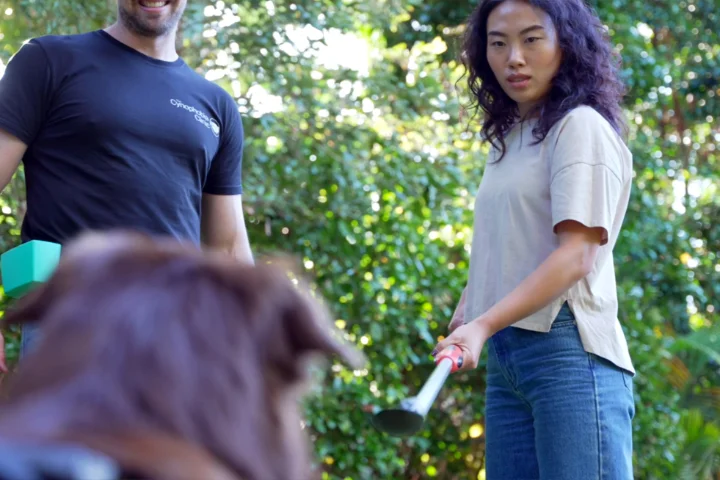
Standard therapy program
Our standard program consists of five one-hour therapy sessions, plus a final two-hour session in which you'll have the opportunity to build confidence with a variety of dogs.
The majority of clients achieve their therapy goals in just six to ten sessions, however additional sessions can be arranged if you need more time.
If for any reason you decide not to continue after the first session, we'll refund your remaining sessions in full.
Intensive therapy program
Our intensive therapy program is designed for clients visiting Sydney for therapy, and is usually completed over two or three consecutive days.
The sessions are extended so you'll have plenty of time to learn skills and build confidence with several different dogs, at whatever pace you're comfortable with.
Of course, we can continue to support you with telehealth sessions when you return home.
Telehealth consultations
If travelling to Sydney isn't an option, we can still support you with therapy or coaching consultations, anywhere in Australia.
Whether this fear is new or something you've lived with for years, we're here to help you make your fear of dogs smaller and your life bigger.
Home visits
Bringing home a cute puppy might sound like a great way to change how you feel about dogs, but it doesn't always go according to plan.
If you're struggling with your own dog, Anthony can help you feel safe and in control in your home, and learn to build confidence with other dogs too.
Virtual reality (VR) therapy
Start with 360° video of real dogs, in person in the clinic or via telehealth at home with a headset we supply.
VR is a gentler first step, not a replacement for real dogs. Once you've built confidence on screen, you can move on to real dogs when you're ready. It doesn't suit everyone, so we'll check it's right for you at your Roadmap session. Read more about VR exposure therapy.
Medicare rebates, NDIS funding, workers compensation, and private health extras can all reduce how much you pay.
See funding and rebatesBacked by science
Exposure therapy is endorsed as the frontline, evidence-based treatment for specific phobias by the Australian Psychological Society, the American Psychological Association, the American Psychiatric Association, and the UK's National Institute for Health and Care Excellence (NICE).
The idea is simple: by gradually and safely facing the thing you fear, at a pace you're comfortable with, your brain learns that it isn't as dangerous as it feels. Over time, the fear response fades as your confidence grows. Decades of research back this up.
- A meta-analysis of 33 clinical trials found that around 85% of people who received exposure therapy for a specific phobia showed significant, lasting improvement.
- Structured exposure protocols report improvement in 85–90% of people treated for a specific phobia — among the highest response rates for any psychological treatment.
- Improvement tends to hold: in follow-up research, around 95% of people who responded still maintained their gains a year later, with no further therapy in between.
- It can also work quickly. A meta-analysis of 67 clinical trials found both single-session and multi-session exposure therapy to be highly effective, and a randomised trial found that a single well-designed session can match the results of months of other therapy.
- It can start virtually, too. A meta-analysis of randomised trials found VR exposure therapy works about as well as real-life exposure for specific phobias, and further research shows the gains carry over to real-world situations.
The research is clear: exposure therapy is effective, fast-acting, and long-lasting. We take pride in offering an individualised approach to exposure therapy that is both informed by research and tailored to your unique circumstances.
How we work
-
Collaborative
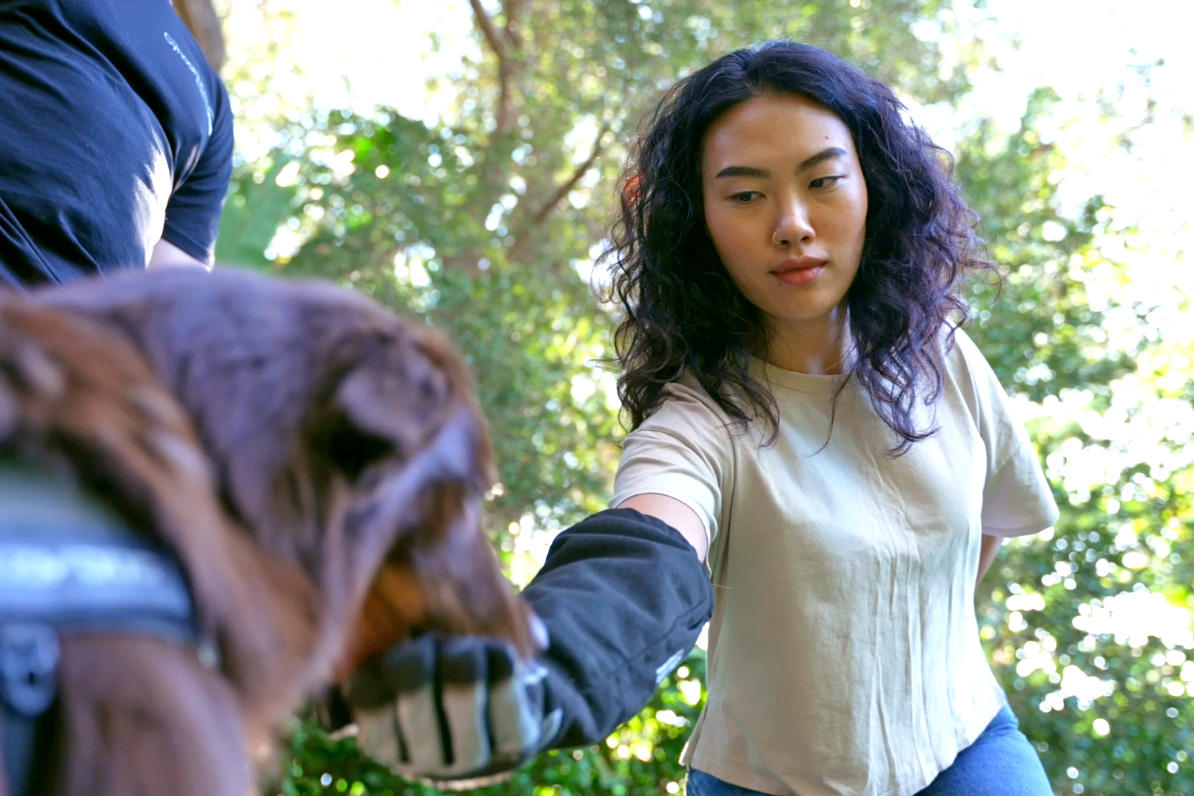
Therapy begins at a level you're comfortable with and progresses only as your confidence grows. We're here to make you feel safe and supported. We will never push or take away your control.
-
Evidence-based
We don't do woo. Our approach is based on the science of fear and learning. Your therapy is led by a clinician who is an expert in both human psychology and dog behaviour.
-
Goal-focused
Whether you want the confidence to own your own dog or just be able to enjoy a stress-free walk in the park, we'll help you achieve the goals that are meaningful to you.
-
Neurodiversity-affirming
We recognise and respect different ways of thinking and experiencing the world, meeting each person with curiosity and care rather than treating differences as deficits to correct.
Ready to get started?
Book a Roadmap sessionCommon questions
-
Exposure therapy is well supported by research as a highly effective approach, but success means something different for everyone. For some clients, going about everyday life without panicking at the sight of a distant dog is more than enough; others want to become confident dog owners. Of course, outcomes can't be guaranteed, but every effort will be made to help you achieve goals that are meaningful to you.
-
You won't ever have to do anything. We never push clients to do anything they're not ready to do — your autonomy is the key to your success. That said, most clients are keen to interact once they feel safe, and we always build up to it gradually.
-
We completely understand — the idea of therapy can feel terrifying for someone with a phobia. That fear usually comes from a misunderstanding of what therapy involves. We create a very controlled environment, with no surprises, and we'll never make you do anything you're not willing to do. It's about building a different experience with dogs — one where you feel safe and in control. If meeting a real dog feels like too big a step to begin with, we can start with VR therapy instead.
-
For many autistic clients, fear of dogs makes complete sense — dogs move unpredictably, make sudden noises, and can make contact without asking. Therapy starts there, not from treating the fear as irrational. We optimise exposure therapy to be more effective and affirming for autistic clients by following the ASCENT model, which emphasises autonomy and accommodating sensory, communication and other differences. In practice that means that nothing happens without your consent, information is concrete rather than reassuring, and the pace is always set by you. Supports and adjustments are straightforward to build in. Just tell us what you need.
-
We aim to be as inclusive as we possibly can. Tell us what you need and it will be built into how sessions run — access, communication, a support worker attending, sessions in a different location, anything else.
-
If you're a Medicare card-holder, make an appointment with your GP and request a 'mental health care plan' to get a psychologist referral for your fear of dogs. See funding and rebates for details.
-
Yes. In-person, telehealth and VR sessions are all classified by the NDIS as 'therapeutic supports'. See funding and rebates for details.
-
Not everyone needs the full number of sessions to overcome their fear. If that's you, you can use the remaining sessions to deepen your understanding of dog behaviour and build more confidence, or finish therapy early if you prefer.
-
Our programs are based on what works for most clients, but every phobia is different and it's impossible to say exactly how many sessions you'll need. If you haven't quite reached your goals by the end, we can arrange additional sessions as needed — as long as you're keen to keep going, so are we.
-
Research shows VR exposure therapy works about as well as real-life exposure for specific phobias, and the gains carry over to real situations. Research specific to dogs is limited but promising, so we use VR as a stepping stone to real dogs. Read more about VR exposure therapy for fear of dogs.
-
Yes. Our intensive program is designed for people visiting Sydney for therapy. If you can't come to Sydney, we can work with you remotely via telehealth, including VR therapy at home with a headset we supply, or you can access our self-paced online therapy program, Unleashed.
-
Psychologists are registered to practise in Australia only, so we can't provide therapy sessions to people living overseas. You can still use our self-paced online program, Unleashed, from anywhere in the world. We can also offer general guidance and help you plan next steps to access support where you live in a Roadmap session.
Ready to take the first step?
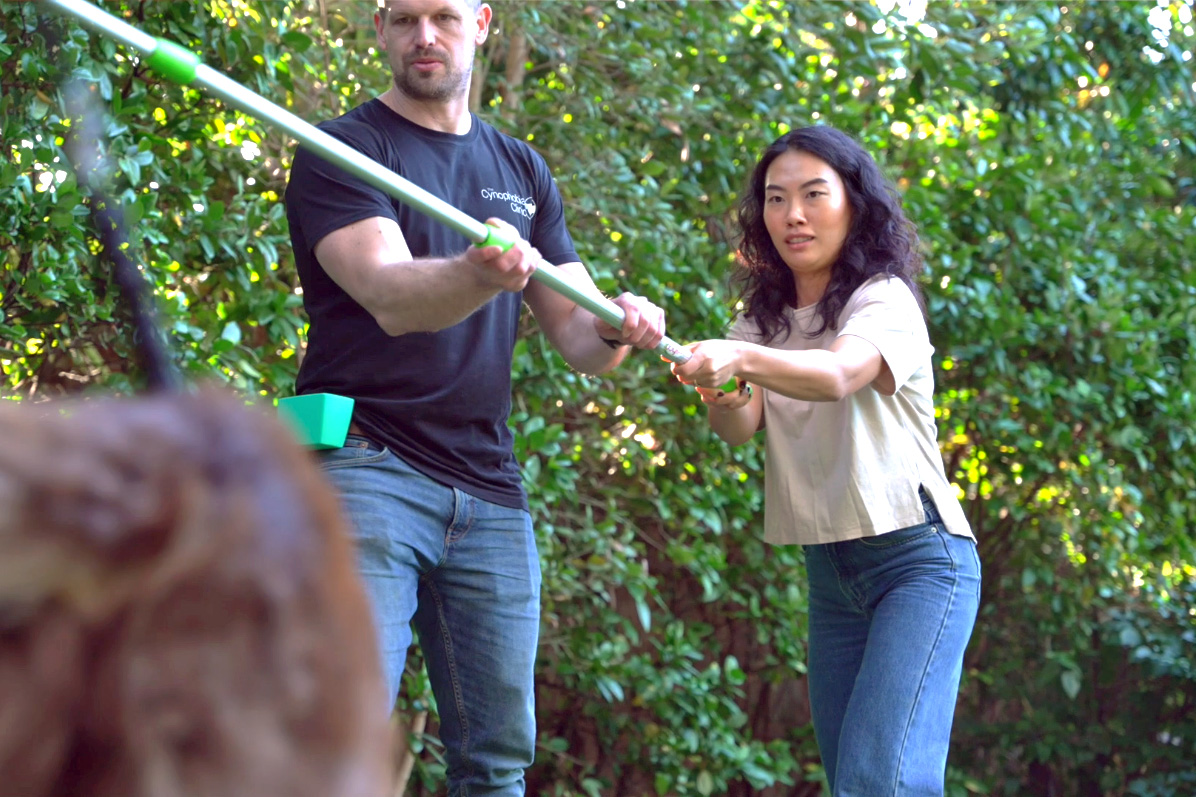
Change feels scary if you don’t have a plan. Let’s make one together. Start with a Roadmap session with Anthony to find a path that works for you.
Book a Roadmap sessionUnleashed (Online)
Looking for a lower-cost, self-paced option? Unleashed is a world-first online self-help program for cynophobia, built on the same evidence-based approach used in the clinic.